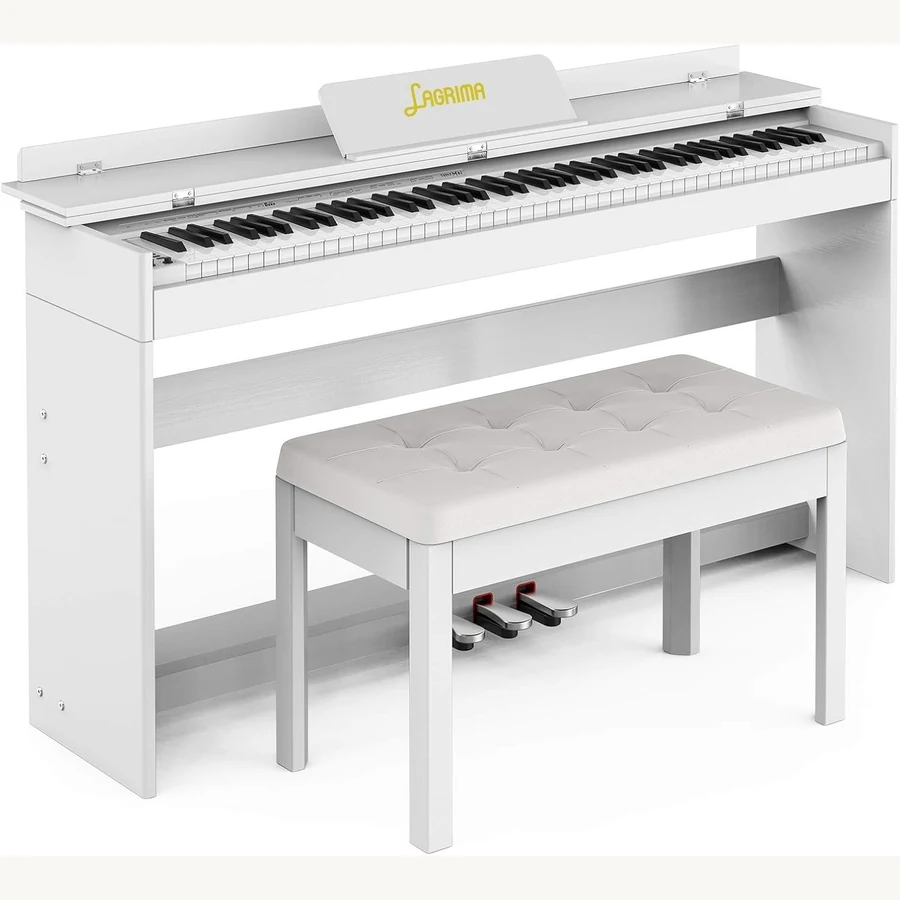
Pairing with cabinets
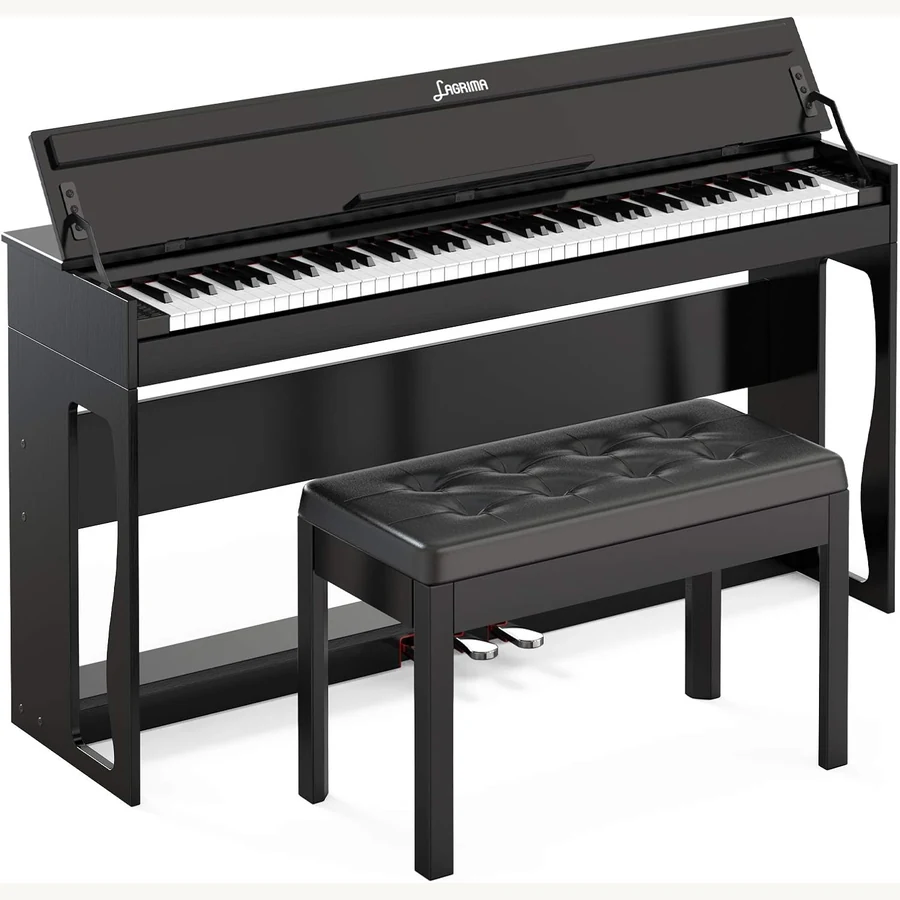
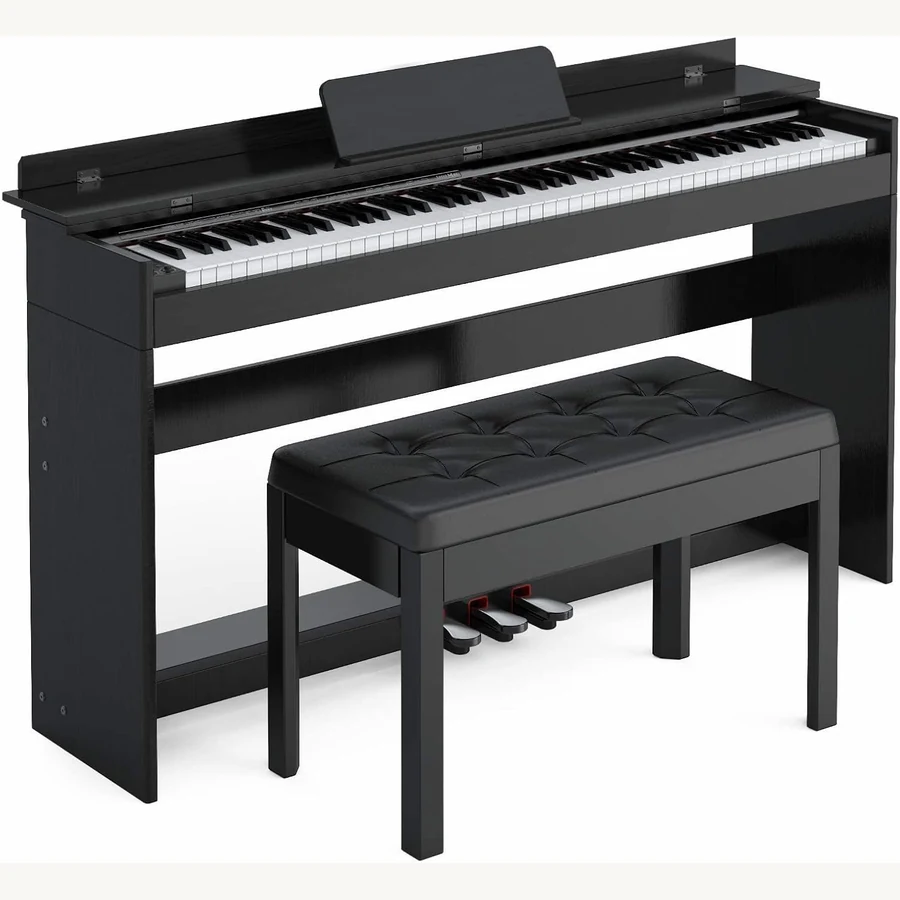
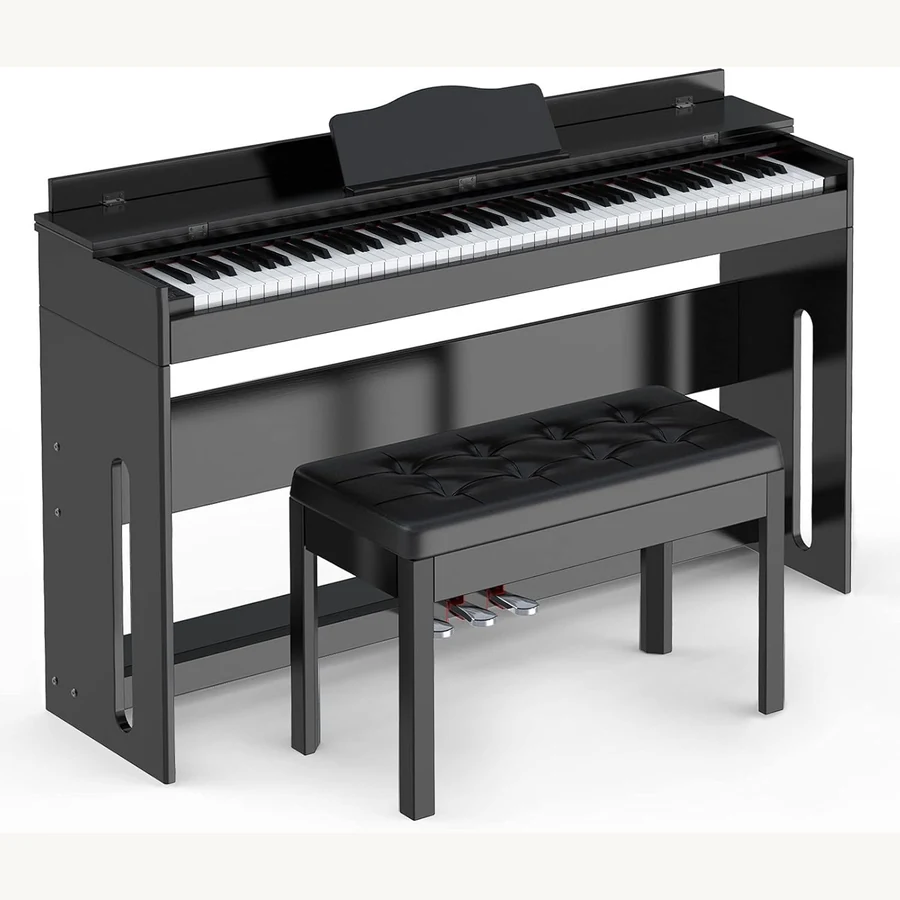
LAGRIMA upright digitals pair with benches roughly 19–21 inches at playing height. Measure from floor to key tops, then subtract forearm geometry — your teacher can eyeball this in one lesson.
Portables on foldable stands sometimes sit lower. Use a higher bench setting or raise the stand feet if the kit includes adjustments.
Assembly tips
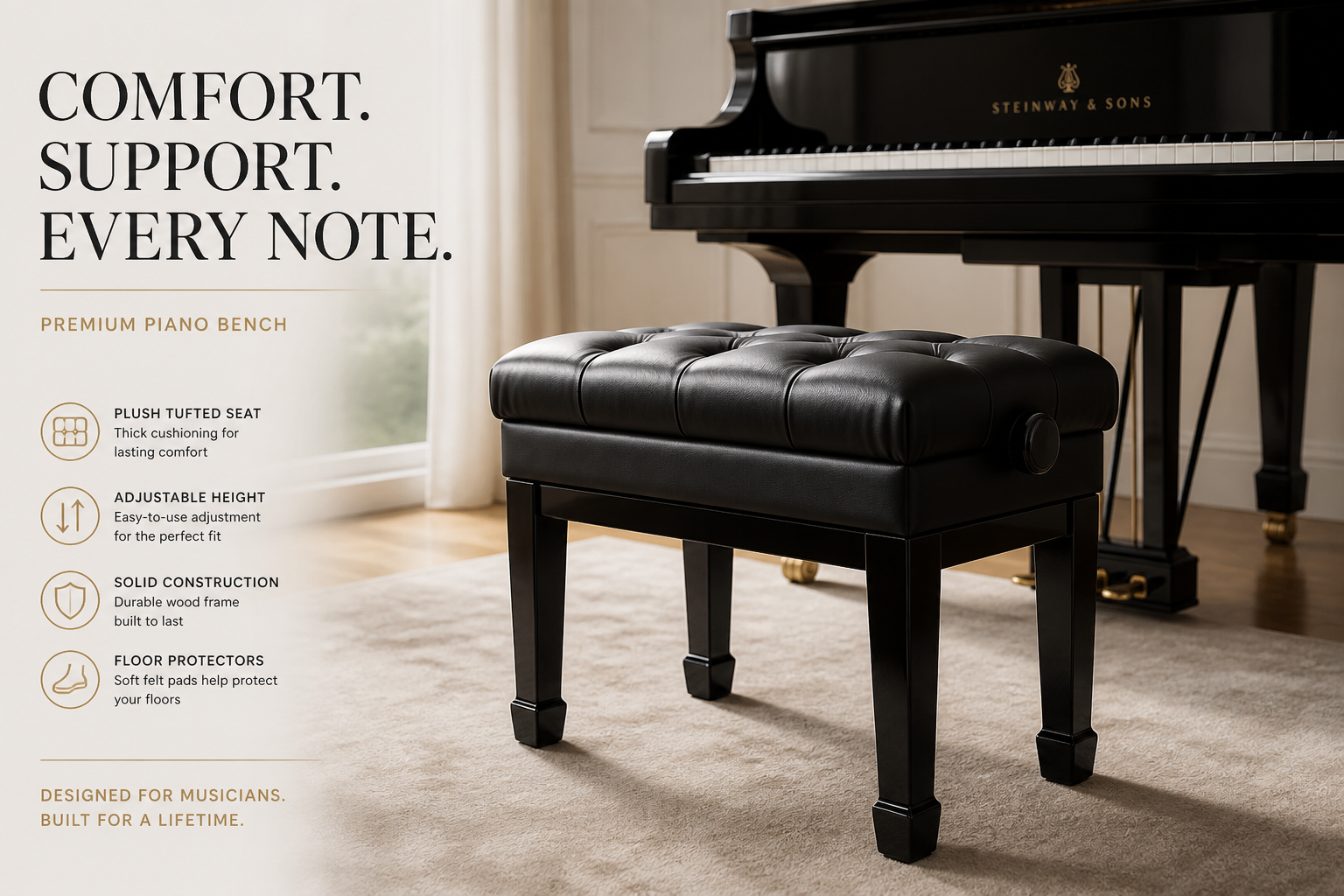
Tighten leg bolts evenly so the seat does not rock. Floor felt pads protect hardwood from leg scratches when students shift during rhythm drills.
Storage lids should close flush so books do not jam the hinge — a pinched method book at lesson time is a morale killer.
Maintenance
Re-tighten hardware every few months. Check rubber feet for flattening; replace inexpensive caps to stop wobble on tile.
In summary
Buy the bench when you buy the piano. Correct height on day one prevents months of compensating technique that a teacher must later undo.
Child ergonomics
Young players should sit so knees form a right angle with feet flat on a stable surface. Use a foot stool if legs dangle — dangling feet pull the pelvis backward and collapse wrist arch.
Adjust height every six months for growing students. Mark the spin column with pencil ticks to remember last season’s setting.
Adult returners
Adults often sit too low to feel powerful at forte. Raise the bench until you can drop into keys with relaxed shoulders, not lifted traps.
If you practice more than forty-five minutes daily, add a thin cushion only if it does not raise height more than half an inch — posture beats plush padding.
Studio etiquette
In shared apartments, place felt under bench legs and use headphones after 9 p.m. Neighbor peace keeps practice legal and moral.
Height math
Sit so elbows hang slightly above keytops when hands curve naturally. If shoulders hitch upward, lower the seat a quarter turn. If wrists break downward, raise slightly.
Players over six feet may need maximum bench height plus a thin riser under the pedal mat — not under the bench — to keep feet grounded while pedaling.
Shared households
Families with two students should mark each player’s bench height with colored tape on the spin column. Switching heights takes thirty seconds and prevents one sibling from practicing at the wrong angle all week.
Materials and cleaning
Vinyl benches wipe with damp cloth only; harsh cleaners crack upholstery. Wood legs benefit from furniture polish twice a year if humidity is dry.
Storage benches should not double as toy chests — excess weight warps hinges and makes the seat rock during staccato drills.
Teacher duet spacing
Adult teacher plus child student needs at least forty-eight inches of bench width. Less space causes elbow fights over middle C in duet repertoire.
Bench and pedal reach
After setting bench height, verify feet reach sustain without locking the knee straight. Pedal expression starts at the ankle, not by scooting the whole torso forward.
If heels lift off the floor when pedaling, lower the bench slightly or add a foot stool behind the pedal zone for unused foot support.
Budget vs premium
Entry benches under one hundred dollars suffice for casual practice if the spin mechanism feels solid. Heavier players and daily hour-long sessions benefit from thicker foam and wider legs that resist wobble.
Match bench finish to your cabinet if the piano lives in shared living space — visual harmony reduces household friction about keeping the instrument visible.
Recital preparation
Before performances, lock bench height with painter’s tape on the spin column and verify the bench cannot rock when the player leans forward for fortissimo chords.
Bring the same bench settings to venue pianos when possible — teachers report students play more confidently when seating matches home practice.
Teachers may ask you to lower the bench for wrist safety — make adjustments in small quarter-turn increments and re-test octaves before the student settles in.
Document the final height in your lesson notebook — returning to the same number after cleaning day prevents mystery wrist soreness the following week.
Padded benches compress over years — if the seat feels thinner, add a firm cushion or replace foam rather than compensating by lowering height too far.
A stable bench makes daily practice predictable and comfortable for every player in the home.