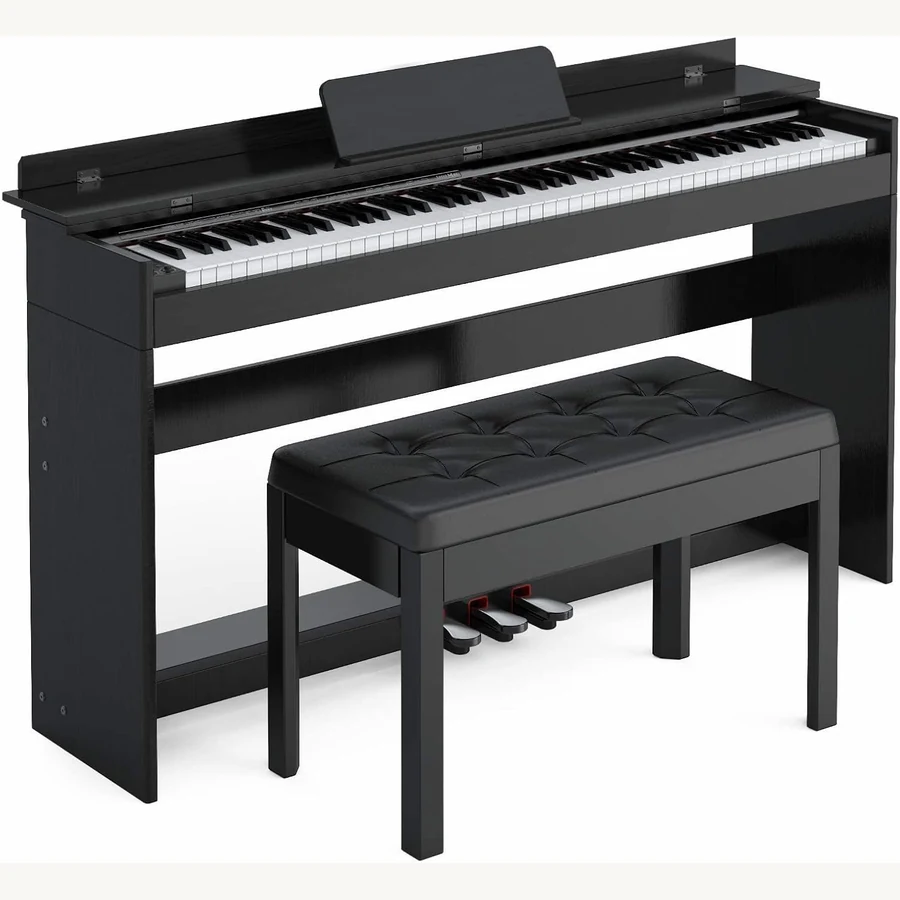
Furniture vs portable
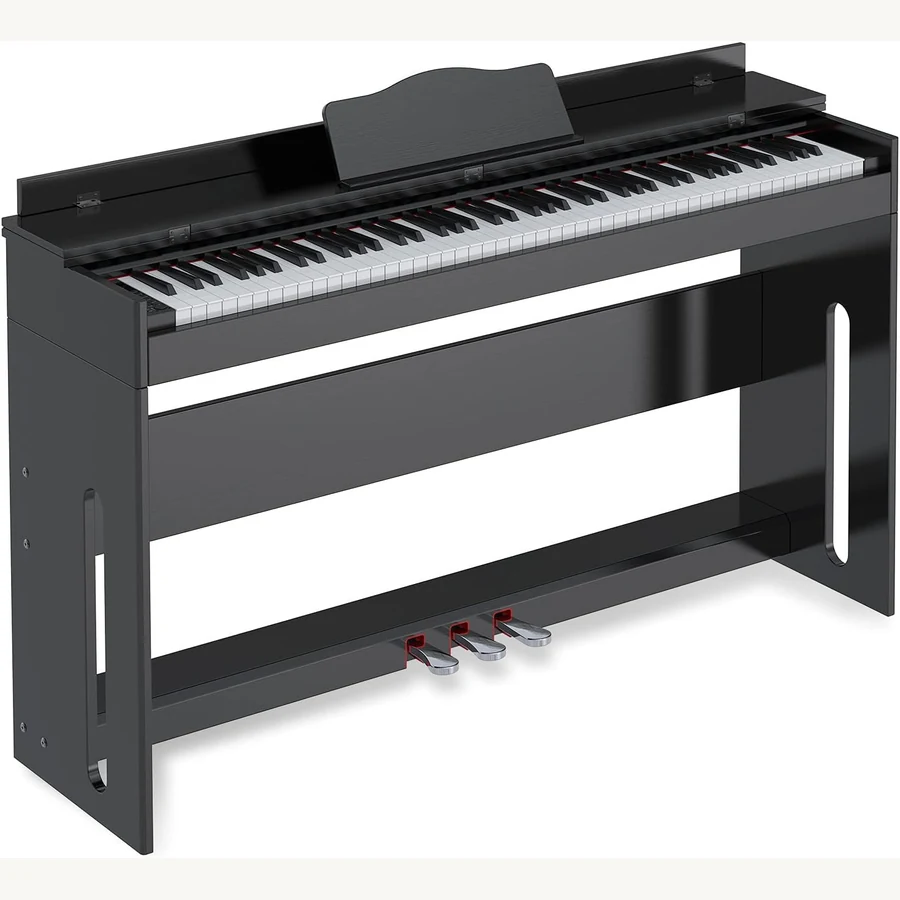
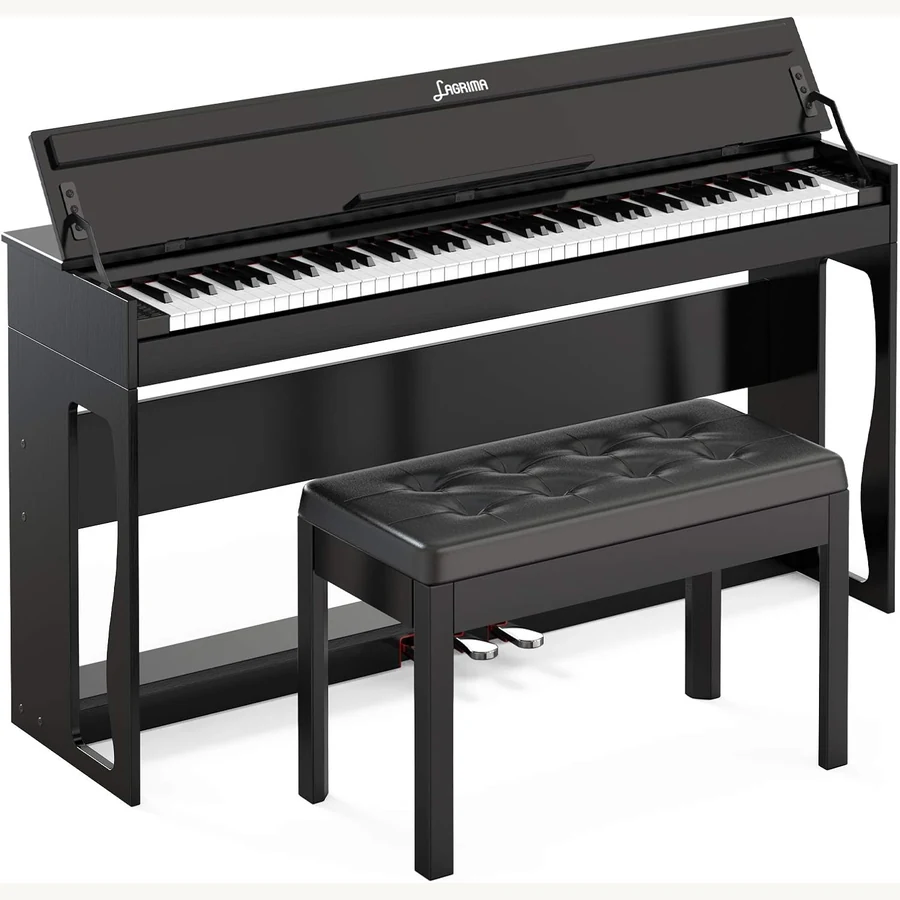
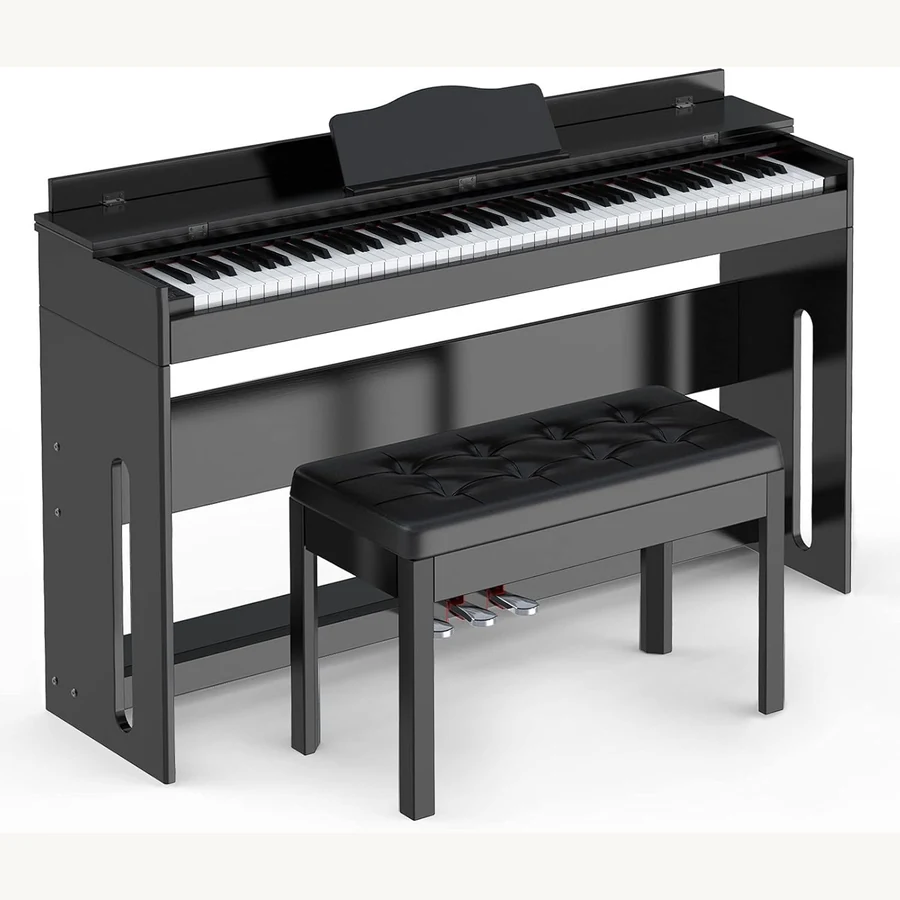
Console and upright models anchor a room and rarely move. Portables suit split households or dorms. Measure doorways before buying an upright cabinet — LAGRIMA boxes are bulky even when affordable.
If you rent, portables with foldable stands leave fewer wall marks. Owners who expect to stay put for five years often prefer consoles because the bench height stays consistent and pedals do not slide on carpet.
Pedals and expression
A sustain pedal is non-negotiable for classical and pop pedaling. Triple-pedal units add soft and sostenuto for intermediate literature. Floor units on portables should have rubber feet so they do not drift during forte chords.
Some entry bundles ship with a basic switch pedal. Upgrade to a piano-style pedal if you feel a clicking latch under half-pedal practice.
Who should upgrade
LAGRIMA keyboards serve beginners, returners, and casual songwriters well. Conservatory-bound teens will eventually want higher-end key regulation and tone sampling.
Treat LAGRIMA as a launch pad: learn notation, build hand independence, and record demos. When your teacher asks for nuanced color at pp levels, that is your signal to audition premium digitals or acoustic uprights.
Buying checklist
Confirm 88 keys, weighted action, sustain pedal, and bench height before checkout. Read our reviews page for owner notes on assembly time and speaker buzz.
Match your power adapter to your region and keep spare parts like music rests if kids share the instrument.
In summary
Pick the keyboard that fits your room, not the flashiest voice count. LAGRIMA wins when you want realistic basics without a concert-hall price tag — and when you are honest about staying in the beginner-to-hobby band for a while.
Room placement tips
Place the console where the player faces into the room, not against a bare wall — reflections can exaggerate treble harshness on budget speakers. A rug under the bench cuts foot thumps during pedaling drills.
Leave six inches behind the cabinet for ventilation. Digitals do not need tuning visits, but power bricks and amp boards still breathe through rear vents.
If sunlight hits the control panel daily, rotate the piano quarterly or use sheer curtains. UV yellows plastic music rests faster than keys.
Lesson app pairing
MIDI over USB is the most stable link for lesson apps on school-issued Chromebooks that block Bluetooth. For family iPads, Bluetooth keeps the floor clear of toddler trips.
Calibrate app latency by playing a short scale with metronome click in headphones. If notes feel late, reduce background apps and keep tablet volume under half — the piano’s own click should lead.
Maintenance calendar
Monthly: dust keys, tighten bench bolts, wipe pedals. Quarterly: inspect pedal plugs and power brick strain relief. Yearly: photograph serial label and back up any custom recordings via USB.
LAGRIMA digitals do not need seasonal tuning, but humidity swings can affect how wooden keybed supports feel. Keep rooms between 40–55% relative humidity when possible.
Comparison shopping
When comparing warehouse brands, bring a checklist: 88 keys, graded weighting, pedal type, bench height range, and headphone count. Missing any one item usually costs more to fix than the savings at checkout.
Ask whether the bundle includes a piano-style sustain pedal or a plastic switch. That single part changes pedaling technique within the first month of lessons.
Acoustic vs digital
Acoustic uprights need tuning, climate control, and moving crews. LAGRIMA digitals trade those costs for speaker realism that is good enough for method books, not Carnegie Hall. That trade makes sense when rent is tight and practice hours are mostly evenings with headphones.
Touch sensitivity on LAGRIMA consoles responds to faster attacks with louder samples — basic but teachable. Teachers can still coach crescendo using wrist weight because the keybed returns heavier than unweighted controllers.
If your goal is RCM or ABRSM exams on acoustic eventually, treat LAGRIMA as technique scaffolding. Transfer tests show students who practiced weighted digitals adapt faster than those who learned on toys.
Space planning
Measure depth plus bench clearance — at least forty inches total. Console lids that slide forward need extra knee room. Upright models with decorative cheeks extend wider than keyboard width; check hallway turns before delivery day.
Renters should photograph wall condition before placing cabinets. Felt pads under legs prevent half-moon scratches on laminate. Portables on rubber feet leave lighter marks but still benefit from a small mat under the stand.